

Wireless Services That Let Your Business Move Beyond Infrastructure Limits.
Getting a site connected sounds simple.
Until you’re waiting on circuits, absorbing high installation costs, or trying to go live when the infrastructure just is not there. Wireless-first services change that equation. Sites and devices go live in days, not months. Locations that could never justify the cost of fiber get reliable connectivity from day one. And when a carrier goes down, traffic moves automatically — without manual intervention.
Globalgig designs, deploys, and manages wireless connectivity as a service, so your network follows your business, not the other way around.
Wireless Services Get Sites Online. Strategy Is What Keeps Them Running.
Wireless services get sites live quickly. That is why it has become the default for locations where fixed infrastructure is not viable.
Each deployment solves the immediate problem. A new store goes live. A temporary site gets connected. Over time, these temporary deployments often become part of the permanent production environment.
The result is an environment where performance is not consistent, and control is not absolute. Coverage varies by location; what works at one site may not at another, depending on the carrier, signal, or setup. Devices connect that nobody formally provisioned. Security policies that apply in the office do not automatically follow.
Issues take too long to diagnose. When something breaks, you are chasing carriers, hardware vendors, and SIM providers to figure out where the issue actually sits.
You can point to sites that are live and to what is working. But running connectivity services reliably across every location is a different problem.


Where Are Connectivity Issues Costing You More Than They Should?


Wireless Built as an Operational Service
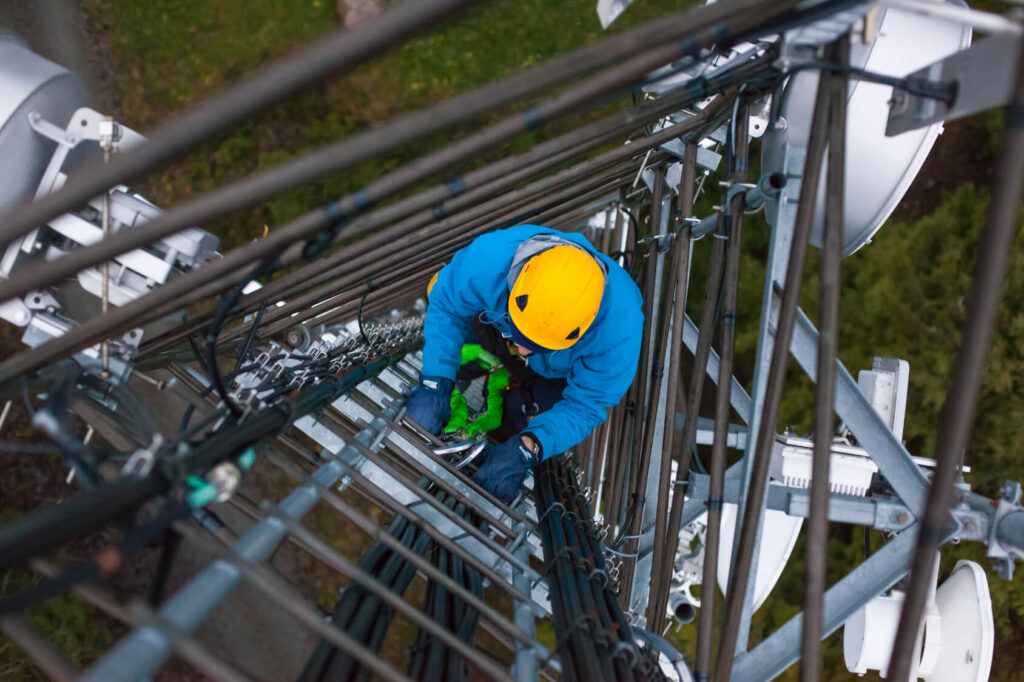
Wireless Architecture and Deployment

Multi-Carrier Connectivity and Commercial Management

One Operational View Across Your Wireless Estate
Wireless Kits for Every Use Case
Our pre-configured kits cover common dual-carrier and vehicle-supported wireless use cases. Where requirements are more complex, we can tailor the adapter, router, antenna and connectivity setup to suit the location, signal conditions, site requirements and expected traffic.
Whatever the deployment, we deliver connectivity, hardware, and 24/7 support all as one managed service.
How This Works Within Your Existing Environment

Stage 1
Understand What Your Wireless Services Need to Do
Most wireless deployments start with looking at signal strength. We start with operational dependency.
We identify which applications, workflows, locations, and devices rely on connectivity to operate, where resilience matters most, and how demand behaves under real-world operating conditions.
- Per-site throughput and latency requirements
- Peak load patterns and traffic behavior
- Mission-critical workflows and uptime thresholds
Stage 2
Validate the Operating Environment
Your company’s requirements define which wireless services need to be supported. Globalgig’s assessment defines what the environment can realistically deliver.
We evaluate site conditions, existing infrastructure, and connectivity constraints to understand how wireless services should be designed before deployment begins.
- Radio frequency (RF) environment and signal constraints
- Existing connectivity and where it falls short
- Site access, planning permissions, and building restrictions
Stage 3
Design Connectivity Without Being Locked to a Single Network
Wireless deployments are often shaped by the limits of a single carrier.
We define how connectivity services should operate across your environment before selecting carriers or hardware, including:
- The role of each access type at each site
- Hardware and antenna selection by location and use case
- How backup paths are built across different carriers or access types
- How wireless integrates with your wider network and security architecture
Stage 4
Remove Vendor Handoffs During Deployment
Wireless services do not fail due to design. It fails during execution. Rollouts often stall between carriers, hardware vendors, and site teams.
We run the deployment end-to-end, coordinating everything through a single delivery owner.
- Site surveys and installation
- Hardware provisioning and configuration
- SIM and network activation
- Multi-site rollout coordination
- Validation and cutover
Deployment is phased around how your business operates, so your sites go live without disruption.
Stage 5
Ongoing Management, One Point of Contact
Most teams end up managing multiple carriers, devices, and issues separately.
We operate connectivity services across multiple carriers as a single managed system through Orchestra, with service tiers that meet your team’s needs where you are. This includes proactive monitoring and incident response through to full device management, configuration, and enhanced SLA support.
- Proactive monitoring, notification, and trouble resolution
- Real-time dashboards and historical reporting
- Hardware availability and health metrics
- Configuration, moves, adds, and changes (Premier)
- Device firmware, patching, and vendor liaison (Premier)
You choose the level of support suitable for your team. Our NOC operates 24/7 across all tiers, with built-in escalation paths and response commitments.
One platform. The right technology, carriers, and equipment for every environment. We design, deploy, and manage the environment end-to-end, helping internal IT teams reduce operational overhead, simplify ownership, and maintain consistency across sites.
Resources

WIRELESS CONNECTIVITY
Four Reasons to Explore Private Cellular Connectivity for Business Transformation, and One Reason Not to

WIRELESS CONNECTIVITY
The Good, the Bad and the 5G: When Fixed Wireless Access Is Right for Your Enterprise, and When It Isn’t

GLOBAL NETWORKING
Consistent Speed, Measurable Results: How a National Collision Repair Leader Transformed IT Operations

WIRELESS CONNECTIVITY
5G Standalone: What It Is, What It’s Used For, and Why Enterprises Should Be Paying Attention

WIRELESS CONNECTIVITY
How LEO Satellite Connectivity Gives Businesses an Extra Shot of Staying Power When the Unexpected Happens

WIRELESS CONNECTIVITY
The Cure for Wireless Fragmentation

Related Products and Solutions

wireless connectivity
IoT Connectivity

Wireless connectivity
LEO Satellite Connectivity

Retail
Wireless Built for Always-On Retail and Hospitality

wireless connectivity
SIM Management

wireless connectivity
Wireless Networking

Energy
Wireless Connectivity for Critical Energy Operations

Find the Right Wireless Model
Wireless decisions are rarely just about one carrier, device, or connection type. The right setup depends on coverage, hardware, SIM models, security, support, cost, and how the deployment will be managed as it grows.
Sense-check the full setup, explore what may work beyond a single-network approach, and understand where a managed model could reduce complexity from the start.